Live Clipping in the Newsroom: How to Publish Faster, Better, and Everywhere

Today, live news is no longer a one-off event in newsrooms; it has become the daily rhythm that dictates every decision and every action. Unplanned press conferences, international crises, natural disasters, election results, and celebrity announcements follow one another in rapid succession. In this context, news agencies and media outlets must provide immediate information across all channels, without ever compromising their editorial standards.
This acceleration raises a key question: how can key moments in a live broadcast be captured and disseminated at the precise moment the information is being reported, without disrupting the editorial team?
Live clipping provides the answer to this very problem.
Live clipping, as seen from a newsroom
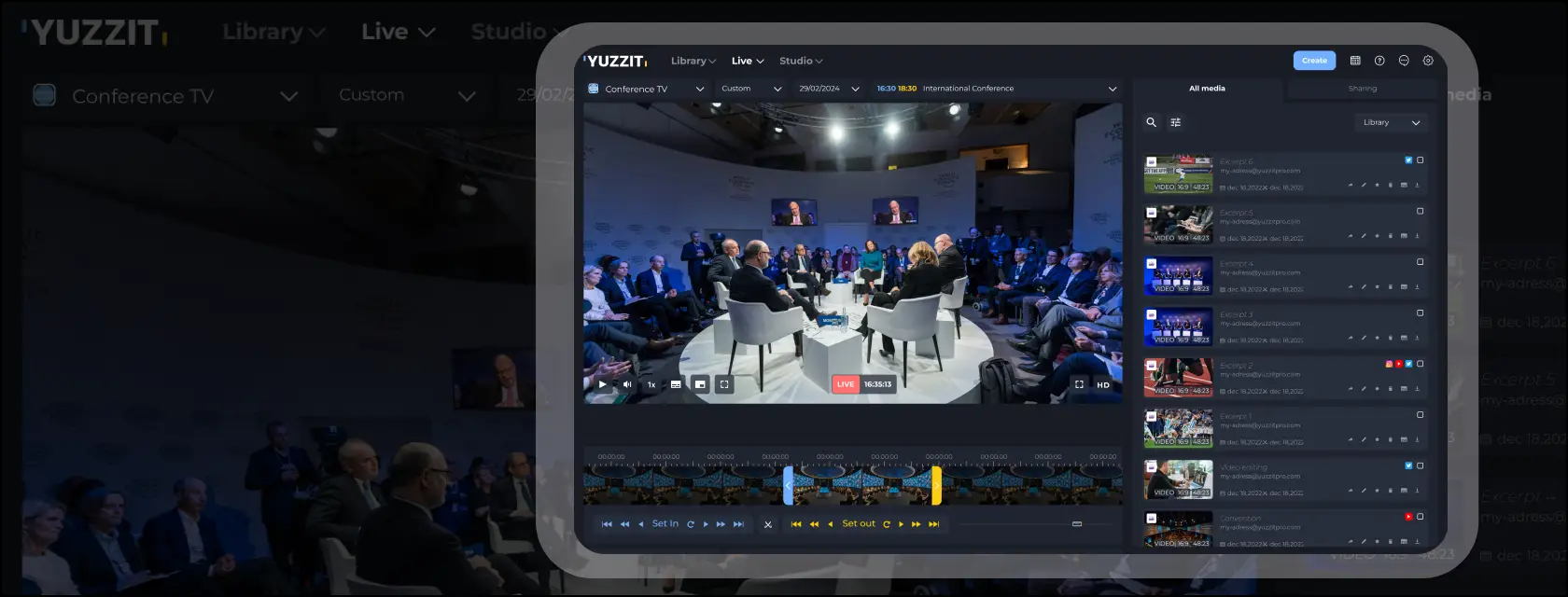
Applied to the world of information, live clipping involves extracting a key moment from a live video stream, editing it slightly , and publishing it almost instantly. It is not a matter of producing secondary or promotional content, but rather of creating a fully-fledged editorial unit, just like a breaking news headline or a push alert.
Unlike traditional workflows, where video is processed after the event, live clipping is a real-time process. An important statement, a powerful image, or an official confirmation can be broadcast while the event is still ongoing, when audience attention is at its peak.
Why live clipping has become a strategic issue for newsrooms
The first reason is speed. Social media platforms and pure players now publish content in a matter of seconds. For traditional media outlets, remaining visible means being able to react just as quickly, without sacrificing the reliability of the information.
The second reason concerns usage. Audiences consume news on a multitude of media and expect short, mobile, contextualized formats. A clear and immediately understandable video clip is often more effective than a long speech or a full replay.
Finally, there is the reality of the teams. Journalists and editors must produce more content, across more channels, often with limited staff.
“Without the right tools, live streaming becomes a source of operational stress rather than an editorial lever.”
Practical uses of live clipping for the media
In a newsroom, live clipping is primarily a tool for breaking news. When news breaks live, a video clip can be published immediately on social media or incorporated into an article that is being written. This synchronization between text, video, and broadcasting enhances the readability of the information.
Live clipping also plays a key role in evolving editorial formats, such as live blogs or event pages. Clips enrich the narrative in real time, providing visual proof and strengthening audience engagement.
Finally, it enables consistent distribution across all platforms. The same excerpt can be adapted into different formats while maintaining a consistent editorial and graphic style, which is essential for the image of a news media outlet.
What does a live-clipping-based media workflow look like?
Before going live
Preparation remains light but structured. Flows are identified and configured in the solution, roles are defined, and editorial rules are clear. The goal is not to anticipate news events, but to be ready to respond without technical improvisation.
During the live broadcast
The work becomes a collective effort. An editor identifies key moments, approves the content, and the clip is published in a matter of moments. Live clipping then becomes a natural part of the editorial process, without creating any disruption between the live, web, and social media teams.
After the event
The clips produced do not disappear. They are reused for analysis, summaries, compilations, or long-term formats. Live broadcasts thus become a source of lasting content, rather than a fleeting moment.
Addressing editorial challenges without overburdening teams
One of the main challenges facing media organizations is balancing speed and reliability.
Live clipping speeds up publication while maintaining clear validation steps. The editorial team remains in control, even in urgent situations.
It also helps reduce the operational workload. By limiting technical manipulations and tool changes, journalists can focus on what matters most: verifying, contextualizing, and prioritizing information.
A comprehensive live-clipping solution ensures visual and editorial consistency through the use of templates. Even in emergency situations, content complies with graphic standards and media identity, which is essential for credibility.
Measuring the impact of live clipping in newsrooms
The effectiveness of live clipping is measured primarily in editorial terms. The time between the event and publication is reduced, the amount of relevant video content increases, and clips are reused more often.
On the audience side, indicators generally show increased engagement, better retention, and increased traffic to media social networks and related articles. Real-time video is becoming a gateway to in-depth information.
In terms of organization, the benefits include time savings, better coordination between teams, and reduced friction related to live broadcasts.
Integration into the existing ecosystem
An effective live-clipping solution integrates seamlessly into the media's technical environment. It must work with existing video streams, communicate with the CMS, interface with social publishing tools, and comply with rights and security constraints.
Technology should serve the writing process, not the other way around.
Example of live clipping in action: ensuring comprehensive coverage of the Telethon
During its annual charity event, "Teleton," SBT had to cover 24 hours of TV broadcasting and a dedicated digital livestream, a real marathon for the teams. With Yuzzit, the editorial team was able to instantly clip and publish more than ninety key moments, including twenty specifically for Instagram.
This ensured comprehensive and consistent coverage of the event while boosting its visibility and encouraging donations. As the team says: "Yuzzit allowed us to quickly publish content across all platforms, which increased visibility and encouraged more donations."
Live clipping, a sustainable lever for the media
Live clipping is not just a video editing feature. It is establishing itself as a strategic building block of real-time journalism, capable of strengthening newsrooms' responsiveness, their video presence, and their competitiveness against platforms.
When information is at stake in a matter of seconds, the ability to capture and broadcast the right moment at the right time becomes a decisive advantage. Thanks to live clipping, newsrooms can produce better and more content: each piece of content is optimized for engagement and distribution, allowing them to intensify the impact of their video presence while managing their teams' workload.
Transform your newsroom with Yuzzit: book your demo now.
Frequently Asked Questions
What is live clipping and what is its purpose in an editorial office?
Live clipping involves extracting and publishing key moments from a live video stream. It allows you to quickly disseminate information, enrich articles, and maximize engagement across all channels.
What are the main benefits of live clipping for editorial teams?
It allows you to produce richer content without increasing your workload, improve publication speed, maintain editorial and graphic consistency, and better engage your audience.
How does live clipping fit into a newsroom workflow?
Before the live broadcast, feeds are prepared and roles defined. During the event, clips are created, validated, and shared in real time. After the live broadcast, excerpts can still be shared and are also reused for summaries, articles, and compilations, optimizing editorial work.
What indicators can be used to measure the impact of live clipping?
You can track publication time, the number and reuse of clips, audience engagement (views, shares, retention), and organizational efficiency (time savings and team coordination).
Share this article

.webp)

Subscribe to our newsletter!
Get our latest news and valuable tips for creating your videos!
Sign up now for our Yuzz’letter!
Our Latest Articles

Presidential Campaign: How to Respond Within Minutes to Every TV and Radio Appearance

Radio: From Live Broadcasts to Published Clips—The Best Step-by-Step Workflows