Cross-Platform Restreaming: Why Streaming Everywhere Can Cost You Money—and How to Turn That Logic on Its Head
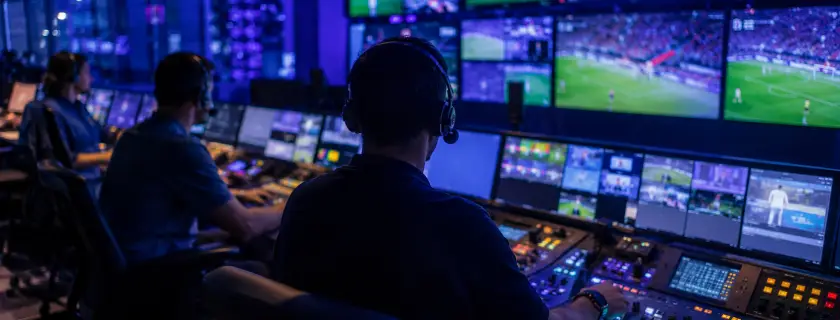
How broadcasters are turning their live distribution strategy into a sustainable revenue driver by managing their monetization window.
A few months ago, a Brazilian streamer named Gaules conducted an experiment worth analyzing for professional broadcasters (StreamsCharts). After years of streaming exclusively on Twitch, he began streaming simultaneously on YouTube. On the surface, the numbers were exciting: his YouTube streams sometimes attracted twice as many viewers as on Twitch. His reach had skyrocketed. But upon closer inspection, the reality was less flattering: his total audience had barely changed. It had simply split between the two platforms.
Greater visibility, the same audience… and twice the operational complexity.
This paradox goes beyond a mere anecdote, as it lies at the heart of the tension currently faced by broadcasters who have invested heavily in multiplatform strategies without always fully grasping all the economic implications. Restreaming has become second nature, almost a given. But broadcasting on five platforms simultaneously does not generate five times as much revenue. And in some cases, it actually destroys revenue.
The real issue isn't the number of platforms you're on, but what you do with them from a business perspective—and how quickly.
What Platforms Don't Tell You About Revenue Sharing
Let's start with the bad news: the business models of the major streaming platforms are structurally disadvantageous to broadcasters that do not generate massive, consistent volumes of content.
On Twitch, the standard split for subscription revenue remains 50/50 for the vast majority of affiliates. On YouTube, the split is more favorable: 70/30 as soon as you join the Partner Program (Stream Metrix); and, more importantly, a live stream continues to generate ad revenue through VOD long after the broadcast ends—something Twitch does not allow on the same scale. These differences are significant when building a live revenue model.
But the problem goes beyond the percentages shown.
Throughout 2024, algorithm changes by major platforms disrupted the advertising revenue of many publishers and media outlets, prompting them to reduce their dependence on Big Tech by shifting toward direct traffic strategies and premium content offerings. What the platforms give with one hand—reach, visibility, native monetization—they take back with the other as soon as they adjust their algorithm rules, revenue-sharing policies, or content priorities. And they make these adjustments regularly (Digital Content Next).
The real divide in the live streaming economy lies here: between the revenue you control and the revenue that platforms control on your behalf.
Platform-dependent revenue: native advertising, donations and tips, and subscriptions through the platforms. The amount of this revenue depends on algorithms, monetization rules, and the decisions of each platform. You are a partial beneficiary of this revenue, not its master.
Revenue streams you control: direct brand deals, content sponsorships, subscriptions on your own channels, and first-party data. Their value depends on your ability to negotiate, build loyalty, and demonstrate your audience. You own them.
So the strategic question isn't "How many platforms am I on?" It's: What percentage of my live revenue do I actually control?
The monetization window: a concept that too few broadcasters understand
Here’s a fact that the revenue and distribution teams should highlight in bold on their dashboards: a live peak moment doesn’t have the same economic value at T+3 minutes as it does at T+3 hours.
Why? Because the value of a live moment is tied to the attention it receives. That attention peaks during the event and in the minutes immediately following it. It then declines inevitably as audiences move on to other things, as social media algorithms flood news feeds with new content, and as the moment becomes recent history rather than the present.
Industry figures confirm this trend. Today, 86% of sports viewers watch TV with a phone in hand. 73% use social media to follow sports news in real time (Broadcast Sport). These viewers aren’t tied to a single screen: they switch back and forth between the live broadcast and their social media feed as the event unfolds. It is precisely during this window—when the live broadcast is still underway or has just ended—that a clip’s value is at its peak.
Once that moment has passed, the content remains useful. But its nature changes: it becomes a replay, an archive, or filler content. It can still be used, but rarely at the same price.
What this means in practical terms for a broadcaster:
A clip of a highlight published within 3 minutes of the event can be integrated into a high-value contextual advertising campaign, offered to a sponsoring partner as part of a “real-time” package, and distributed across multiple platforms while the audience is still in the emotional heat of the moment. Its CPM value is higher. Its organic engagement is higher. And its ability to generate first-party data through your own channels is fully realized.
The same video posted three hours later? It will be viewed less, less quickly, and in a less emotionally charged context. It’s still worth something. But not the same thing.
The speed of publication is not an operational issue or a matter of convenience for the teams. It is a direct economic factor. And it is one of the least well-measured factors in broadcast organizations today.
The three revenue models that depend on this window
Mastering the monetization window is therefore not just a minor advantage. It is the key to generating three distinct and growing revenue streams.
1. Contextual Advertising and the CPM of Immediacy
The video advertising market doesn't just pay for the audience; it also pays for the context. An advertiser who buys ad space around a Ligue 1 match, a press conference, or a live product launch is paying to be associated with that moment—not necessarily with the archived content.
A sponsored video posted while the moment is still fresh generates higher organic engagement, greater algorithmic visibility, and a contextual fit that justifies a premium CPM. Audiences who interact with this content are highly engaged—exactly what advertisers are looking to capture.
Market data confirms this trend: advertisers are no longer just looking for impression volume. Since late 2024, the underlying trend has been toward buying based on qualified audiences and context. What you’re selling them is an association with a specific moment, and its value decreases over time.
2. Brand deals and live content sponsorship
It is the revenue driver most directly correlated with mastering the window of opportunity and, paradoxically, one of the least formalized in multiplatform strategies.
A broadcaster that can guarantee a partner a branded presence across multiple platforms within 3 to 5 minutes of a key moment has a strong negotiating point. It is no longer selling an ad spot or a page banner. It is selling the promise of contextual presence and responsiveness—something that the platforms themselves cannot always guarantee.
This type of “real-time” package is already being used by the most advanced sports organizations and by some news outlets. But it requires an editorial and technical infrastructure capable of delivering on that promise. A fragmented workflow—where a clip goes through an editing tool, then a subtitling tool, then a reformatting tool, before being manually published platform by platform—does not deliver on that promise. It consistently falls short.
3. First-party data: the long-term asset that unstructured restreaming destroys
This is the most strategic issue—and the one that is most often overlooked in discussions about restreaming.
When you stream live content on YouTube, TikTok, or Instagram, you reach their audiences. But the data on those audiences—who’s watching, when, from where, and how they’re engaging—remains in the hands of the platforms. You receive aggregated dashboards, not actionable individual signals.
However, first-party data has become the most valuable advertising asset on the market. In 2025, 71% of publishers recognized it as their primary driver of positive advertising results, up from 64% the previous year. 85% anticipate that its role in monetization will continue to grow (Adtelligent). And advertisers are following suit: by the end of 2024, guaranteed buys targeting first-party audiences had become widespread among publishers who had access to such data.
This data is generated only on your own channels—your website, your app, your newsletter, and your subscriber area. And it is generated only if your content is published on these channels in time to capture the audience while it is still available.
A broadcaster that distributes 100% of its live content on third-party platforms is building their audience, not its own. A multiplatform strategy has lasting value only if it includes a stream to your own channels, updated at the right pace.
Where Friction Arises and What It Really Costs
So far, the logic is clear. What is less clear is what actually prevents us from taking advantage of it, even with competent teams and sound strategic intentions.
The answer is almost always the same: the workflow.
In most broadcast organizations, the production workflow for a live clip looks like this. Someone (often a reporter, a social media manager, or a technician, depending on the organization) identifies the highlight during the live broadcast. The clip must then be edited using a dedicated tool, exported, transferred to an automatic captioning tool, the captions reviewed and approved, the aspect ratio adjusted for each platform (vertical for TikTok and Instagram Stories, square for certain networks, horizontal for YouTube), graphics added, and finally published manually on each channel. And the process is repeated for every highlight.
When carried out thoroughly, this process rarely takes less than 20 to 30 minutes in a non-optimized environment. By that time, the monetization window has closed.
The cost of this friction is twofold. There is the direct cost: the economic value of clips published too late, which could have been included in premium sponsor packages or generated higher organic engagement. And there is the indirect cost: the operational burden on teams, which ties up several people in low-value-added tasks rather than allowing them to focus on editorial and business decisions.
This is precisely the problem that a solution like Yuzzit addresses by design. The goal isn’t just to make life easier for teams—even though that’s a benefit. It’s to reduce the time-to-publish to the point where the monetization window is consistently accessible. From capturing the live feed to publishing a subtitled, cropped, and branded video across multiple platforms, the 3-minute threshold is achievable. This difference—between a 20-minute fragmented workflow and a 3-minute integrated workflow—is the recovered window. And that represents economic value, not just operational convenience.
What Successful Broadcasters Do Differently
There are already organizations that have incorporated this approach into their revenue model. Not only do they create more content than their competitors, but they do so more quickly and with a clearer business purpose.
The sports broadcaster, which has restructured its match-day workflow, now publishes the first clip of a highlight in less than 4 minutes across 4 platforms simultaneously. And thanks to an organizational decision, this has enabled it to offer its sponsorship partners “guaranteed live moments” packages priced significantly higher than its standard formats. Its advertisers pay for responsiveness, not just for viewership.
The news outlet, which tracked its time-to-publish for live interviews, discovered that clips published within the first 5 minutes generated an engagement rate 2 to 3 times higher than its usual posts. It reorganized its editorial priorities accordingly—not to please algorithms, but because engagement is the metric that determines the value of its advertising space.
An event organizer that repurposes its conference presentations on the very same day—while the event is still fresh in people’s minds, participants are still networking, and the hashtags are still trending—offers its corporate partners a level of visibility that their competitors cannot replicate by posting the content the following week.
The common thread is the same in every case: they have stopped treating publication speed as an operational constraint. Instead, they have incorporated it as a variable in their business model.
The Three Decisions to Make Now
If you're a decision-maker at a broadcaster (Director of Digital, Head of Distribution, Chief Revenue Officer), here are the three strategic questions this article should prompt you to ask your teams.
What is your current time-to-publish?
If you don’t measure it, you’re not managing your monetization window—you’re at its mercy. Time-to-publish (the time between identifying a key moment and publishing the first clip on the first channel) is a financial KPI, not an editorial one. It should be included in your revenue dashboards alongside CPM and video completion rate.
What percentage of your live streaming revenue goes unclaimed by the platforms?
Try this exercise: Identify the sources of your live revenue that don’t depend on decisions made by YouTube, TikTok, or Instagram. These include direct brand deals, content sponsorships, subscriptions on your own channels, and monetizing your first-party data. If this figure is less than 30% of your total live revenue, your financial independence is fragile—and it will become even more so with every algorithm change.
Does your toolset shorten or lengthen your time-to-publish?
A fragmented workflow, with multiple specialized tools that aren’t integrated, costs more than it seems. Not just because licensing is expensive, but because it takes you out of the monetization window with every event. The question to ask your operations teams isn’t “Does it work?” but “How many minutes elapse between the highlight and publication?” If the answer is more than 10 minutes under live conditions, you have an economic problem, not a technical one.
Key Takeaways
The global live streaming market reached $100 billion in 2024. It is expected to triple by 2030. Audiences spend eight times more time watching live content than on-demand content. Advertisers and partners are ready to go, with budgets waiting to be spent. (Teleprompter)
The constraint, therefore, is not the market, but the response window.
A live stream is yours for only a few minutes. What you do with it during that time defines your revenue strategy far more than the number of platforms you stream on.
Yuzzit is a SaaS solution for live clipping and social-first publishing. It enables broadcast and distribution teams to go from a live stream to a published clip across multiple platforms in less than 3 minutes: automatic captions, multi-format cropping and branding included.
Frequently Asked Questions

Share this article

.webp)

Subscribe to our newsletter!
Get our latest news and valuable tips for creating your videos!
Sign up now for our Yuzz’letter!
Our Latest Articles

Presidential Campaign: How to Respond Within Minutes to Every TV and Radio Appearance

Radio: From Live Broadcasts to Published Clips—The Best Step-by-Step Workflows